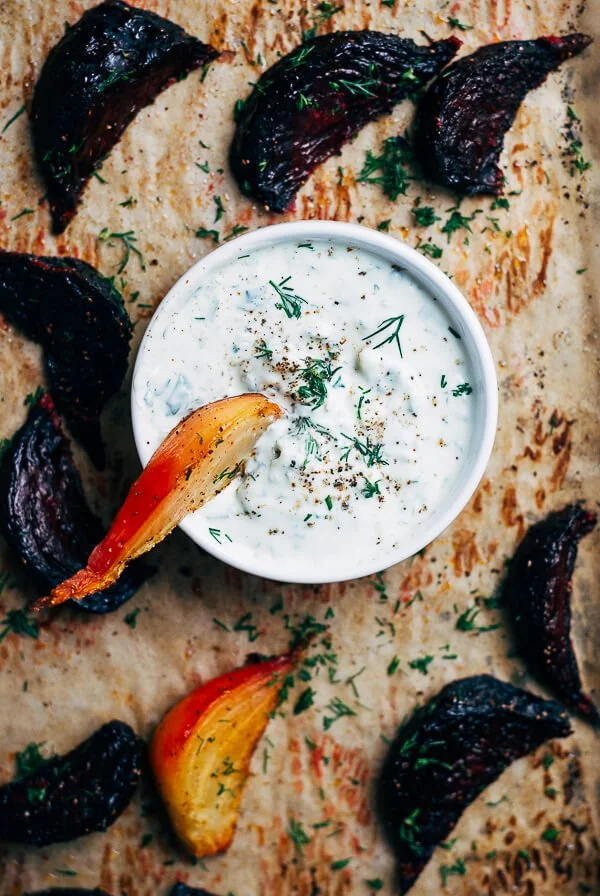
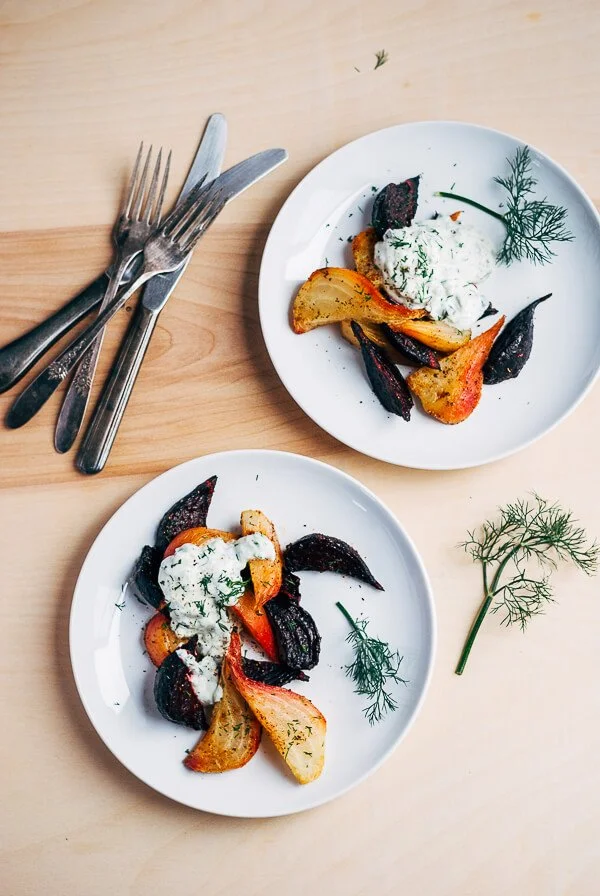
Roasted Beet Wedges with Tzatziki sauce
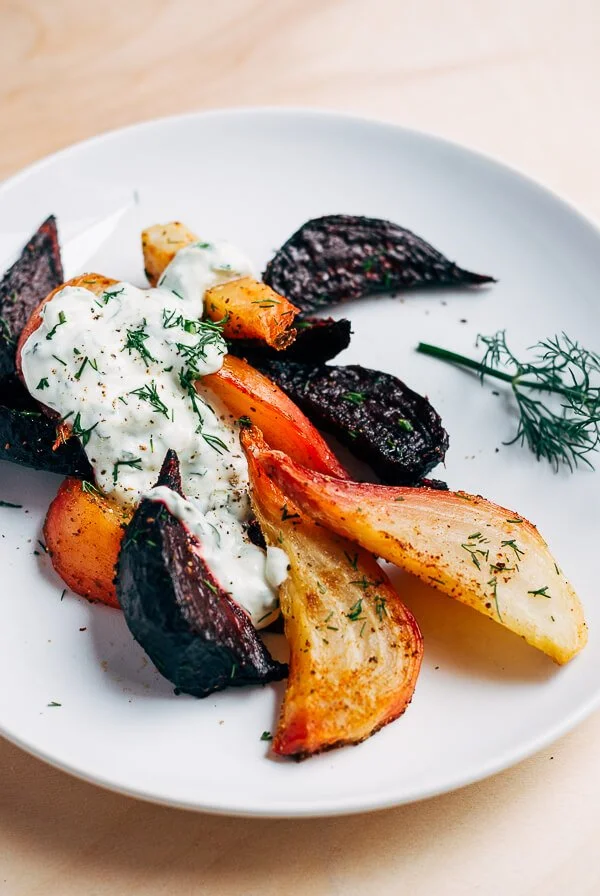
Belonging to the family as spinach, quinoa, and chard, both the leaves and root of beetroots may be eaten. Though the leaves are known for its bitter taste, whereas the root is sweeter, with a hint of floral.
Many people who aren’t fond of beets would probably say it has a dirt-like taste, and though, yes, beets taste earthy, that to me, isn’t all that bad of a thing, though it is an acquired taste.
The taste of beets can change depending on how we choose to prepare and cook them. Beets come in several varieties, each having its own unique taste. Although beets are available year-round, they are the sweetest and most tender during its peak season, which is usually from June to October.
While white and yellow beets make for pretty dishes, only the red and purple beets have the cancer-fighting compound betacyanin, which gives us nutrients, and because they're higher in sugar, they are also naturally the sweetest, meaning, when roasted, the sugar makes them almost as if they are caramelized, bringing out their sweetness even more.
health benefits
1. Anti-cancer properties
The plant pigment that gives beetroot its rich, purple-crimson color is betacyanin, a powerful agent, thought to help suppress the development of certain types of cancer, such as bladder cancer.
2. Lowers blood pressure
Beetroot is naturally rich in compounds called nitrates, making them heart-friendly.
Nitrates help to improve blood flow by relaxing the blood vessels, reducing arterial stiffness, and promoting dilation which potentially lowers blood pressure. A reduction in blood pressure is beneficial for the avoidance of heart disease and stroke. Studies suggest that nitrate-rich foods, like beetroot, may also help in heart attack survival.
3. Support energy levels
Beetroot juice is known to support exercise endurance and improve performance. It also aids recovery because when muscles are in a resting state, the nitrates in beetroot help bring more oxygen to the muscle cells helping muscles recover more efficiently.
4. Improves digestive health
Beetroots are one of the richest sources of glutamine, an amino acid essential to the health and maintenance of our gut. They’re also rich in fiber, which supports bowel function, the environment of the gut and the beneficial bacteria that reside there.
5. Anti-inflammatory
Beetroots have been ranked as one of the 10 most potent antioxidant vegetables. The betalain compounds, responsible for the root’s red color, have been shown to have high anti-oxidant and anti-inflammatory capabilities.
This means they help protect cells from damage and may be helpful in the fight against age-related conditions such as heart disease and cancer.
Is beetroot safe?
Yes! For some, eating beetroot may induce beeturia, which is simply a red or pink color in the urine or stool, and is totally harmless! Beet greens and, to a lesser extent, the roots contain high levels of a natural compound called oxalate. Individuals with a history of oxalate-containing kidney stones should avoid over-consuming high-oxalate foods like beetroot.
Beetroot is a fibrous and sweet anti-inflammatory antioxidant that helps protect against heart disease, cancer, inflammation, and so much more.
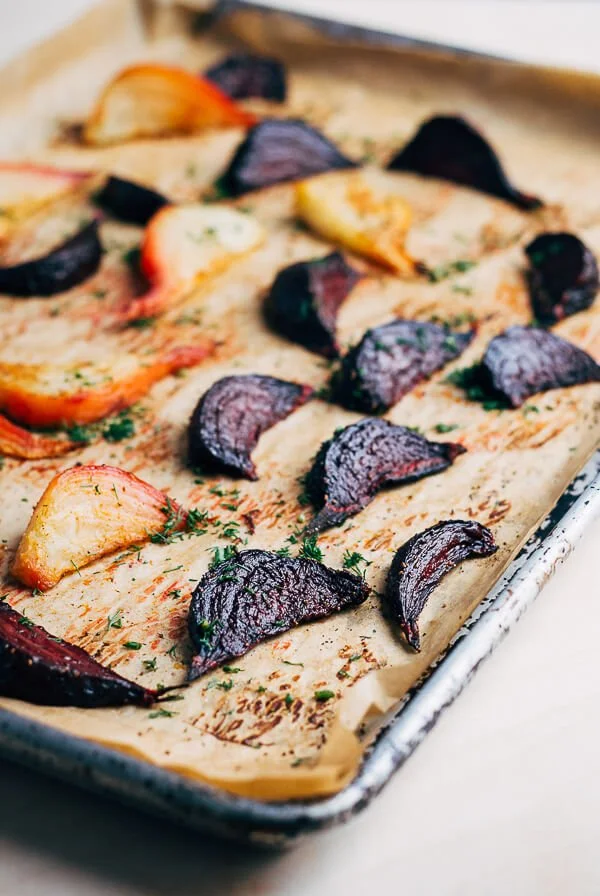
Recipe for beet wedges
2-3 large beets (greens not intact)
2 tablespoons olive oil
1 clove of garlic
All-Purpose Roasted Vegetable Spice Blend
Black pepper
Himalayan salt
1/2 teaspoon paprika
Balsamic vinegar (enough to coat evenly)
Some fav dried herbs to add:
Basil
Thyme
Parsley
Sage
Rosemary
INSTRUCTIONS
Heat the oven to 350/400°F.
Measure two 2-foot lengths of aluminum foil and crisscross them on a small-rimmed baking sheet.
Slice the tops and bottoms off the beets, and cut the beets into wedges from top to bottom (small beets may only need to be quartered; cut larger beets in half horizontally first, then cut each half into about 6 wedges).
Toss the beets well with olive oil and seasonings and put them, in one layer, on the cross-section of foil on the baking sheet. Group them snugly but in one layer.
Lay your choice of herb sprigs on top of the beets and close the package tightly by folding each sheet of foil in and sealing it with the others. The package should be flat and relatively airtight.
Roast the beets for 45 minutes, but flip them every 15 minutes.
Remove them from the oven and, avoiding the steam, carefully peel back the foil. Check to see that the beets are cooked through (a thin knife should slide through without resistance). Also, check that the bottoms of the beets are nicely caramelized (they should be darkened and wrinkled). If they’re not done, seal the package again and return the beets to the oven for 10 to 15 minutes.
Depending on the heat of your oven, the thickness of your baking sheet, and the size of your wedges, they may take more or less time.
Prep your Tzatziki sauce.
Enjoy!
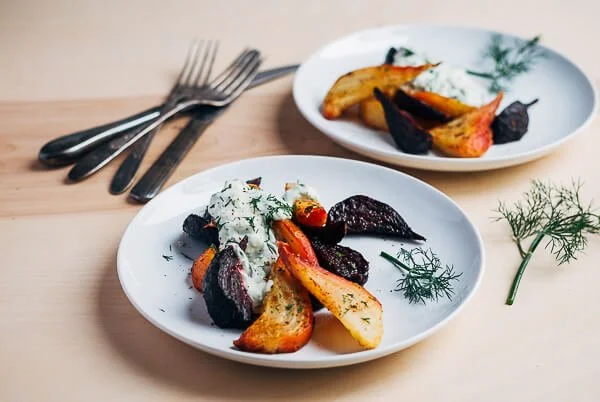
How to Make Tzatziki Sauce
I first started eating tzatziki sauce at Mediterranean / Greek restaurants, but I’ve since learned that it’s incredibly easy to make at home and definitely one of my must-make sauces when incorporating more veggies into my diet.
So, what is tzatziki?
Tzatziki is a salted yogurt and cucumber dip that’s made of strained yogurt, shredded cucumber, olive oil, garlic, lemon juice, salt, and herbs. I know you’re probably like…. what? But don’t knock it until you try it. Especially if you have an already established and open palate!
Authentic Greek tzatziki is most often made with sheep or goat yogurt, but my tzatziki recipe calls for regular vegan Greek yogurt (I like Chobani). It’s easier to find in-store, and still has the creamy, thick consistency you want in tzatziki sauce. Along with the other traditional ingredients, I stir in for a bright, tasty finish.
Delicious on sandwiches like pita wraps, or served alongside a Mediterranean salad like tabbouleh or couscous salad, or top it onto falafel/falafel burgers, or a flatbread.
And last but not least, serve it with pita chips and lots of grilled veggies like this beet wedge recipe for a delicious, easy snack.
Recipe for the Tzatziki Sauce
Ingredients
½ cup finely grated cucumber
1 cup thick (I use vegan) Greek yogurt
1 tablespoon lemon juice
2 tablespoons extra-virgin olive oil
1 garlic clove, grated
¼ teaspoon himalayan salt
1 tablespoon chopped dill and/or mint
Instructions
Here’s how you do it:
Start by grating the cucumber. I use the largest holes on a box grater to give my final sauce texture and plenty of green flecks.
Next, squeeze the water out of the grated cucumber. This step is essential for making creamy tzatziki – if you skip it, the water from the cucumber will cause your sauce to separate. Squeeze the cucumber directly over the sink, or press it lightly between paper towels.
Then, stir everything together! Whisk together in a medium bowl: The squeezed cucumber with the yogurt, olive oil, lemon juice, seasonings, and herbs, and chill until you’re ready to use
Add a pinch of salt and/or a squeeze of lemon just before serving.
Enjoy <3